How a gap in the New Cairo market became 1,800 sqm of premium co-working — and what it took to get there.
The opportunity for Soil Spaces wasn't obvious from the outside. Mivida — a master-planned community in New Cairo developed by Emaar — already had office space. What it didn't have was workspace that felt like it was actually designed for the people using it. Most offerings were transactional: a desk, a WiFi password, a monthly invoice. Nobody had built something around how knowledge workers actually spend a day.
That gap was the starting point. Not "how do we build a co-working space" — but "what would a hospitality company build if it were given a floor of office space to operate?"
Identifying the opportunity
Tayf had been operating Daily Dose out of Mivida for over a year before Soil Spaces became a real project. That operational presence — being physically in the community, talking to residents and workers — gave us a ground-level view that a market study wouldn't have.
We noticed a consistent pattern: knowledge workers coming into the Daily Dose location in the morning, staying for hours, taking calls, running small meetings. They weren't looking for a café. They were looking for a workspace that wasn't an office.
When the opportunity to lease a floor in the Mivida business park came through, the decision wasn't difficult. We had the operational DNA — Daily Dose had already shown us how to run a hospitality-led space. What we needed to build was the workspace layer on top of that.
"We weren't building a co-working space with a coffee bar. We were building a hospitality concept that happened to have desks."
— Mohamed Samy, Founder & CEODesign decisions that shaped the space
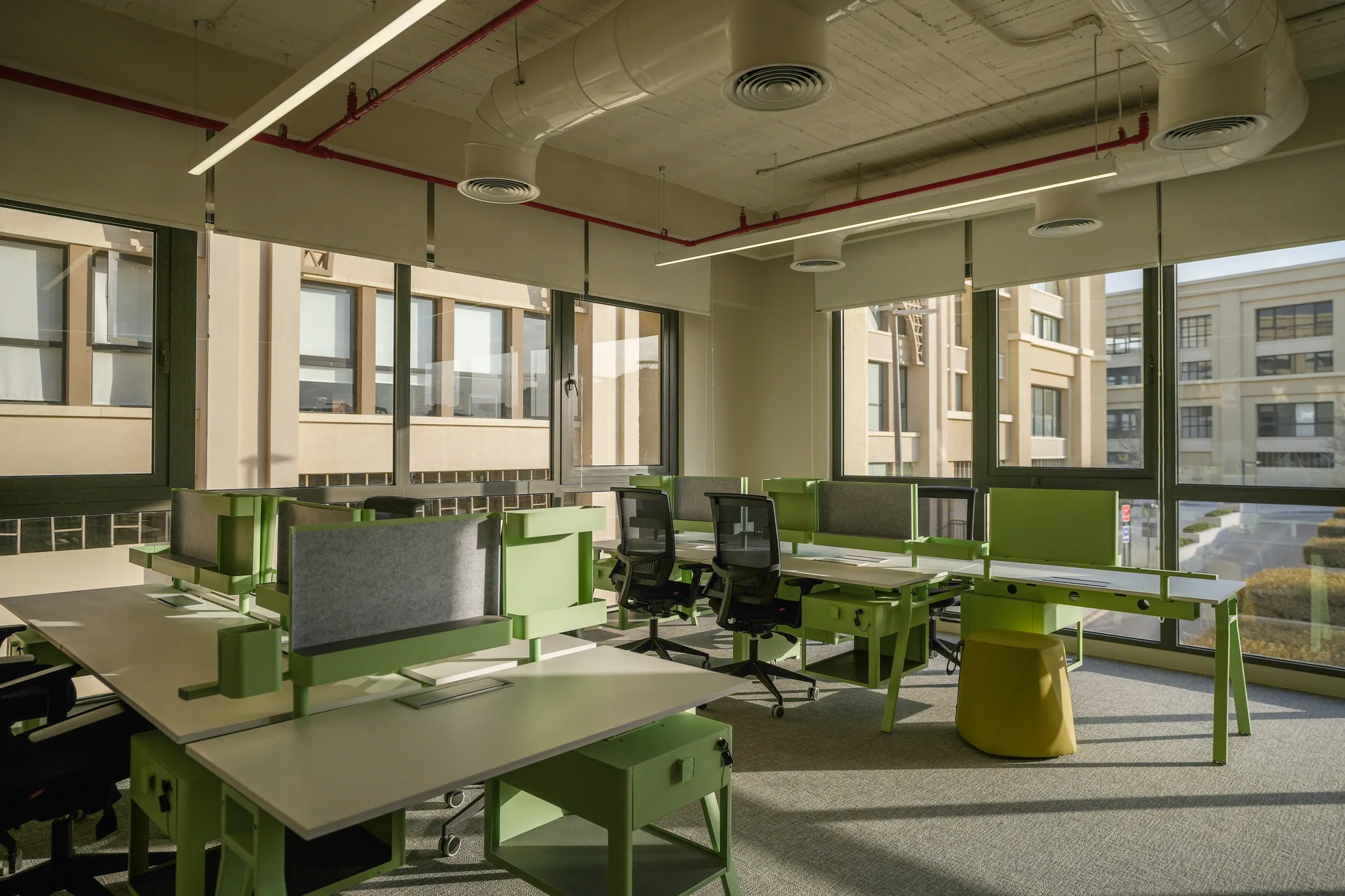
The 1,800 sqm layout went through several iterations before we landed on the final configuration. The core tension was between maximising rentable area (which pushes toward density) and maintaining the atmosphere that makes the space actually worth coming to (which pushes toward openness).
We resolved this by treating the common areas — the café counter, the lounge, the event space — as load-bearing, not optional. Tenants weren't just paying for a desk. They were paying for access to a place that functioned well all day, had good light, and didn't feel like a WeWork from 2015.
The material palette leaned warm: raw concrete, natural timber, linen textiles. Every finish decision was measured against how it would look and feel at 7pm under warm light, not just 10am with the sun coming through.
Signing anchor tenants
We approached tenant acquisition the way you'd approach brand partnerships, not leasing. The goal wasn't to fill square metres — it was to build a community of companies whose presence would make the space better for everyone else inside it.
Johnson & Johnson came first, which changed everything. Having a global blue-chip company as an anchor tenant meant that subsequent conversations with Luxoft, Kenvue, and Cushman & Wakefield moved much faster. The quality signal was already there.
For Luxoft, we went a step further — building a white-label workspace within the Soil Spaces environment that carried their brand identity while using our operational infrastructure. That project became its own case study in how operator and tenant can build something better together than either could alone.
What year one taught us
The hardest lesson from year one wasn't operational — it was about the relationship between space and community. A beautiful space with no community is just expensive real estate. Community without a well-run space is just a mailing list.
We got the space right early. The community came through deliberate effort: programming, introductions, events. Amira El-Bagory, who leads community and member experience, built the connective tissue that made Soil Spaces feel like something worth coming back to.
The iOS and Android app — built and launched in year one — turned out to be more important than we expected. Not for bookings (though it handles those), but for giving members a clear signal that this was a properly managed operation. It set the standard.